



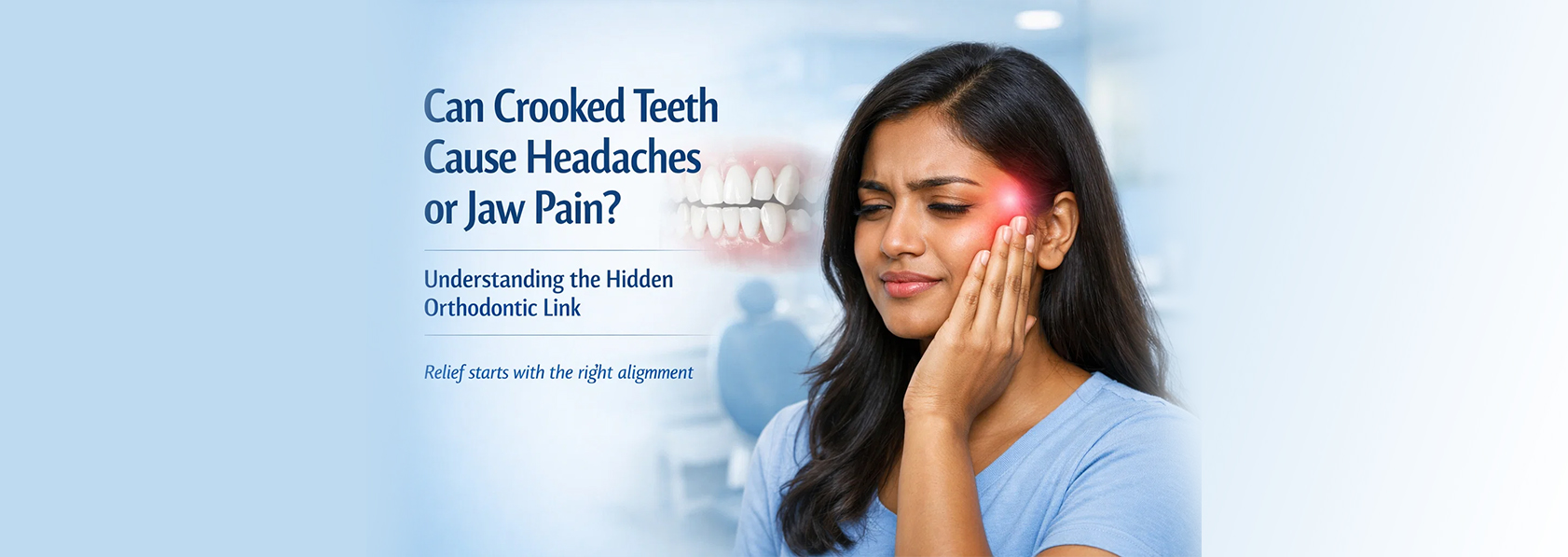
Crooked teeth are often considered a cosmetic concern, but their impact can extend beyond appearance. In many cases, the way your teeth are aligned affects how your jaw functions and how pressure is distributed while chewing or speaking.
A common question people ask is whether crooked teeth can cause headaches or jaw pain. The relationship between crooked teeth headache jaw pain is more common than people realize, especially when misalignment begins to affect muscle function and bite balance.
Your teeth and jaw are designed to work together in a coordinated way. When your teeth are properly aligned, the pressure from biting and chewing is evenly distributed. This balance allows your jaw muscles to function without strain.
However, when teeth are crooked or misaligned, this balance is disrupted. Some teeth may take more pressure than others, and the jaw may shift slightly to compensate. Over time, this uneven pressure can cause stress in the jaw muscles and joints.
This constant adjustment is one of the primary reasons why misalignment can lead to discomfort beyond just the teeth.
Jaw pain is one of the most noticeable symptoms of misaligned teeth. When your bite is not properly aligned, your jaw may struggle to find a natural resting position.
This can result in:
These symptoms may start mildly but can worsen over time if the underlying cause is not addressed. The longer the imbalance continues, the more strain is placed on the jaw joint.
Yes, crooked teeth can contribute to headaches. The muscles responsible for jaw movement are closely connected to the head and neck region. When these muscles are under constant tension, the discomfort can spread beyond the jaw.
This may lead to:
Many individuals experiencing crooked teeth headache jaw pain do not immediately associate their symptoms with dental alignment, which is why the issue often goes undiagnosed.
Misaligned teeth can also lead to other subtle symptoms that develop gradually. These include:
These signs indicate that your bite is not functioning efficiently and may require attention.
Correcting alignment helps restore balance in the bite and reduces unnecessary strain on the jaw muscles. This not only improves comfort but also supports long-term oral health.
Braces gradually reposition teeth into proper alignment, helping improve both function and stability of the bite.
CTA – Explore braces treatment option here
Clear aligners provide a more discreet and comfortable way to correct alignment issues while allowing flexibility in daily routines.
CTA – Learn more about Invisalign treatment
Addressing misalignment early can prevent symptoms from worsening. Ignoring issues related to crooked teeth headache jaw pain may lead to more complex problems over time, including chronic discomfort and advanced dental complications.
Early treatment can:
Crooked teeth are not just about appearance-they can influence how your jaw functions and how your muscles respond to that imbalance. The connection between crooked teeth headache jaw pain highlights the importance of looking beyond cosmetic concerns.
By understanding this link, you can take the right steps toward improving both comfort and oral health.
If you are experiencing jaw discomfort or frequent headaches, it may be worth evaluating your dental alignment.
👉 Consult Dr. Chetan Agarwal to understand the most suitable treatment for your condition.