



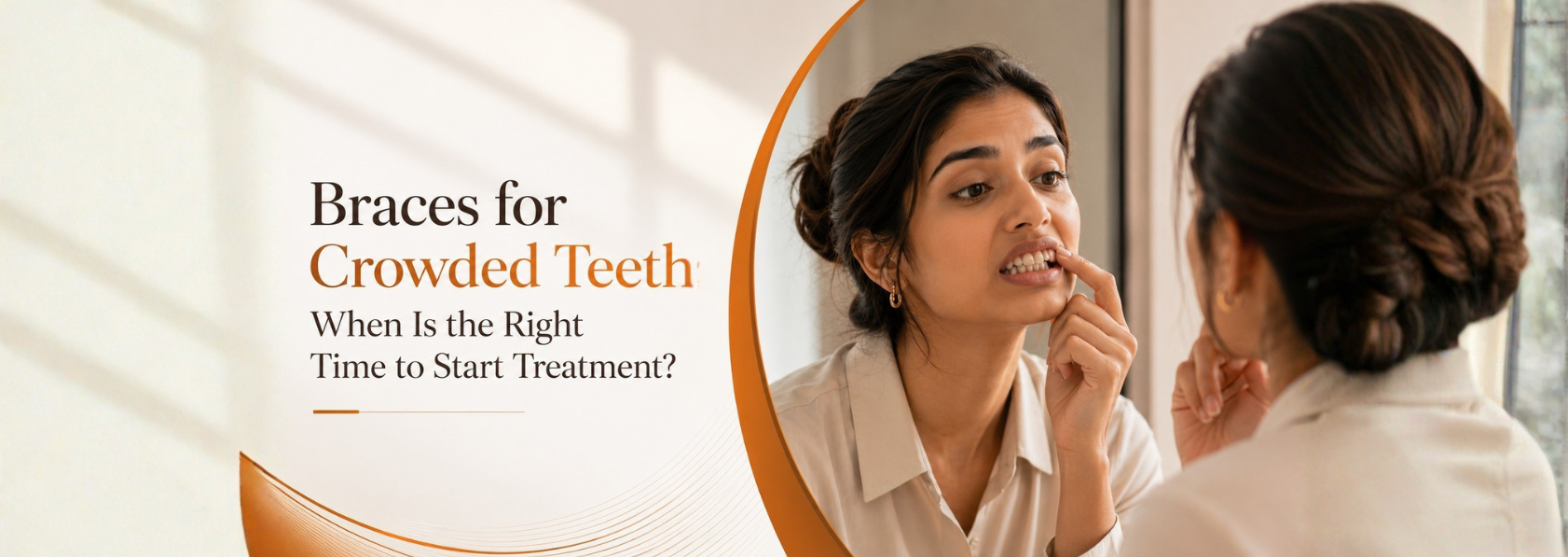
Crowded teeth are one of the most common orthodontic concerns seen in both children and adults. They occur when there isn’t enough space in the jaw for all the teeth to align properly, causing them to overlap, rotate, or erupt out of position. While many people think crowded teeth only affect the appearance of a smile, they can also make it more difficult to maintain good oral hygiene and may increase the risk of cavities, gum disease, and uneven tooth wear over time.
Crowding doesn’t usually improve on its own. As teeth continue to shift with age, the problem may become more noticeable and, in some cases, more difficult to manage. Identifying the underlying cause and seeking an orthodontic evaluation at the right time can help prevent further complications and allow treatment to be planned more effectively.
Whether crowding develops during childhood or later in adulthood, understanding when to begin orthodontic treatment is an important step towards achieving a healthier, well-aligned smile.
Crowded teeth develop when there isn’t enough space in the jaw for all permanent teeth.
Common causes include:
Without treatment, crowding often becomes more noticeable over time and makes maintaining oral hygiene more difficult.
Crowded teeth don’t always cause pain, which means many people don’t realise they need orthodontic treatment until the problem starts affecting their oral health or daily comfort.
You may benefit from braces for crowded teeth if you notice any of the following signs:
Not everyone with crowded teeth requires immediate treatment. However, an orthodontic consultation can determine whether braces or clear aligners are the most suitable option based on your individual needs.
The right time to begin orthodontic treatment depends on factors such as age, dental development, and the severity of the crowding. An orthodontic assessment helps determine whether treatment should begin immediately or whether regular monitoring is more appropriate.
Orthodontists recommend that children have their first orthodontic evaluation by around the age of seven. At this stage, it’s possible to identify developing alignment problems while the jaws are still growing. Even if braces aren’t required straight away, early assessment allows treatment to be planned at the most appropriate time.
The teenage years are often an ideal time for orthodontic treatment because most permanent teeth have erupted while the jaw is still developing. Correcting crowding during this stage can make treatment more efficient and help prevent alignment problems from becoming more severe.
Braces aren’t just for children and teenagers. Adults with healthy teeth and gums can also benefit from orthodontic treatment. Many people choose to straighten crowded teeth later in life to improve oral hygiene, correct bite concerns, or address changes in tooth alignment that have developed over the years.
Rather than focusing on age alone, the decision to begin treatment should be based on a comprehensive orthodontic evaluation. An experienced orthodontist can assess your teeth, explain the available treatment options, and recommend a personalised plan that’s right for your individual needs.
Correcting crowded teeth isn’t just about achieving a straighter smile. Properly aligned teeth are easier to clean, function better, and can help prevent long-term dental problems.
Here are some of the key benefits of braces for crowded teeth:
When teeth overlap or are tightly packed together, it’s difficult to remove plaque and food particles effectively. Straightening your teeth with braces creates better spacing, making brushing and flossing easier. This helps reduce the risk of cavities, gum disease, and bad breath.
Crowded teeth can affect how your upper and lower teeth fit together. Braces gradually align your teeth and bite, making chewing more comfortable and distributing pressure evenly across your teeth.
When certain teeth carry more biting force than others, they can wear down faster. Correcting crowding helps distribute chewing forces evenly, reducing unnecessary stress on individual teeth.
Teeth that are properly aligned are easier to keep clean, which helps reduce plaque build-up and lowers the risk of gum inflammation and periodontal disease.
Starting orthodontic treatment can feel like a big step, but understanding the process can help you feel more confident.
Here’s what you can typically expect:
Initial Consultation
Your orthodontist will examine your teeth, bite, and jaw alignment. Digital scans, photographs, and X-rays may be taken to assess the severity of the crowding and develop a customised treatment plan.
Personalised Treatment Planning
Based on your diagnosis, you’ll receive a recommendation for braces or Invisalign, along with an estimated treatment timeline and expected outcomes.
Beginning Treatment
Once your braces are fitted or your Invisalign aligners are ready, your orthodontist will explain how your treatment will progress and provide guidance on maintaining good oral hygiene throughout the process.
Regular Follow-up Appointments
You’ll visit the clinic periodically so your orthodontist can monitor your progress and make any necessary adjustments. These appointments help ensure your teeth continue moving safely and according to plan.
Wearing a Retainer
After treatment is complete, you’ll be advised to wear a retainer to maintain your new smile and reduce the chances of teeth shifting back over time.
Although treatment duration varies from person to person, many patients complete orthodontic treatment within 12 to 24 months. Your orthodontist will provide a more accurate timeline based on your individual case.
Can crowded teeth be corrected without braces?
The most suitable treatment depends on the severity of the crowding. Mild cases may be treated with clear aligners, while moderate to complex cases often require braces. An orthodontic evaluation can help determine the best option for your individual needs.
Is there an ideal age to start treatment?
Orthodontic treatment can be successful at different stages of life. While children are encouraged to have an orthodontic evaluation by around the age of seven, teenagers and adults with healthy teeth and gums can also benefit from treatment.
How long does treatment usually take?
Treatment time varies depending on the complexity of the case and the type of orthodontic treatment recommended. In many cases, braces or clear aligners are worn for 12 to 24 months, although some patients may require a shorter or longer treatment period.
Do braces cause pain?
You may experience mild discomfort for a few days after your braces are fitted or adjusted. This is temporary and usually improves as your teeth begin adapting to the gentle pressure created during treatment.
Can crowded teeth become worse if left untreated?
In some cases, yes. Crowding may become more noticeable over time and can make brushing and flossing more difficult. This may increase the likelihood of plaque buildup, cavities, gum disease, and uneven wear on the teeth
Crowded teeth are more than just a cosmetic concern. They can make it harder to maintain good oral hygiene, affect your bite, and increase the risk of dental problems over time. Seeking an orthodontic evaluation early can help determine the right time to begin treatment and prevent the condition from becoming more complex.
Whether you’re considering braces for crowded teeth or Invisalign, the best treatment depends on your individual dental needs. Dr. Chetan Agarwal, Maharashtra’s 1st & Only Diamond Elite Invisalign Provider, offers personalised orthodontic treatment using advanced digital technology to help patients achieve healthier, well-aligned smiles.
Led by renowned orthodontist Dr. Chetan Agarwal, our Pune-based clinic offers comprehensive dental and orthodontic care, including clear aligners, smile makeovers, and invisible braces. Trusted by families across Wakad, Baner, Pimpri-Chinchwad, and central Pune, we blend advanced technology with personalized care to deliver confident, healthy smiles.