



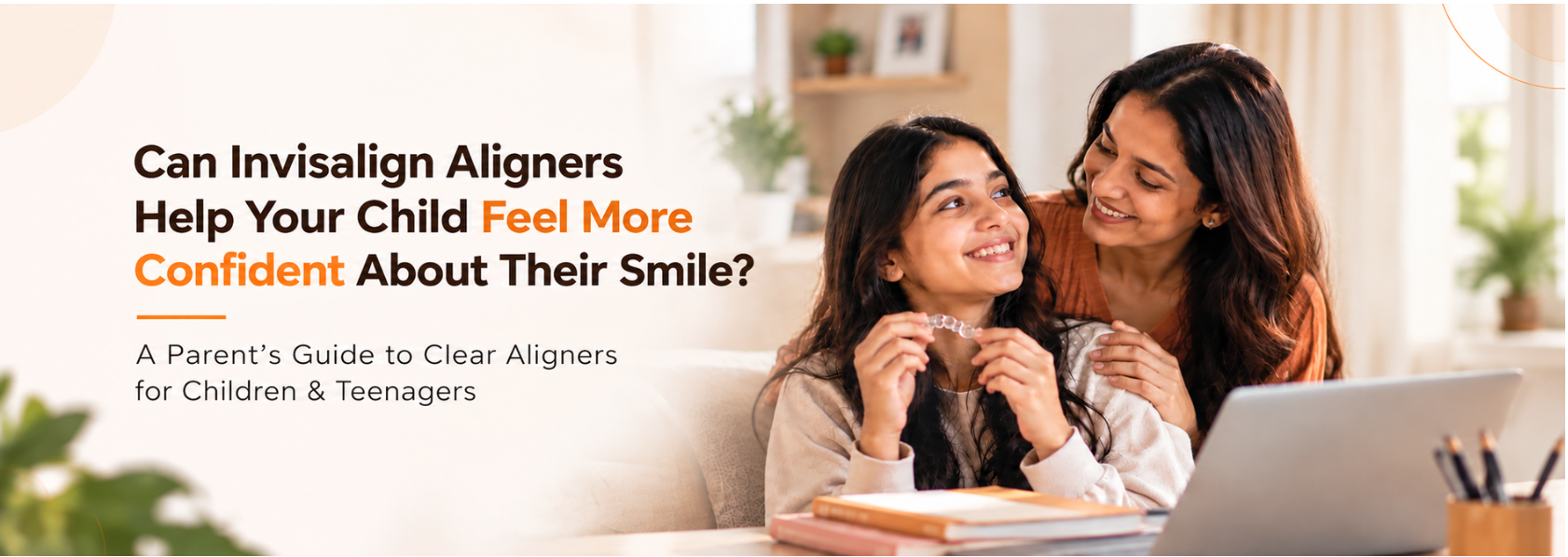
Every parent wants their child to feel comfortable and being themselves. But as children grow older, they may become more aware of how their teeth look, particularly around friends, at school, in photographs or during social activities.
Crooked teeth, crowding, gaps or bite-related concerns may sometimes make a child feel self-conscious. You might notice small changes, such as covering their mouth while laughing, avoiding photographs or becoming hesitant to smile.
If your child is bothered by their teeth, you may wonder whether orthodontic treatment could help.
For some children and teenagers, Invisalign aligners can provide a discreet way to gradually improve tooth alignment. Because the aligners are removable and designed to be less noticeable, they may fit more easily into certain everyday routines.
However, treatment should never be chosen simply because clear aligners are popular or discreet. Whether they are appropriate depends on your child’s dental development, tooth alignment, bite and individual orthodontic needs.
Children do not always see their smiles in the same way adults do.
A small gap, crowded tooth or alignment concern that may seem minor to a parent can feel much more noticeable to a child. As children become more aware of photographs, friendships and social situations, they may start paying closer attention to their appearance.
Not every child with misaligned teeth will feel insecure, and that is perfectly normal. The important thing is to listen if your child is expressing a concern.
Rather than immediately reassuring them that there is nothing to worry about, give them an opportunity to explain what is bothering them. Feeling heard can be just as important as addressing the dental concern itself.
If tooth alignment or the bite is affecting your child, an orthodontic assessment can help determine whether treatment is appropriate.
Invisalign aligners are clear, custom-made trays that are designed to gradually move teeth according to an individual treatment plan.
For some younger patients, one of their appealing features is that they are relatively discreet when worn. This can be particularly relevant for children or teenagers who are concerned about drawing attention to their orthodontic treatment.
They may be able to continue with school, social activities and photographs without traditional-looking orthodontic appliances being as noticeable.
However, discreet treatment does not automatically make Invisalign the right choice. The appropriate treatment depends on the type of tooth movement needed, the child’s dental development, bite and overall orthodontic condition.
No. Invisalign treatment is not automatically suitable for every child.
Children’s teeth and jaws may still be developing, and orthodontic requirements can vary considerably between patients.
During an assessment, the orthodontist may consider:
This individual assessment is important because treatment should be based on the child’s needs rather than the popularity of a particular orthodontic option.
Children and teenagers already have busy schedules that can include school, homework, tuition, sports, hobbies, outings and time with friends.
Clear aligners are removable, which can make some aspects of daily life more manageable. They are generally taken out while eating and placed back in afterwards according to the orthodontist’s instructions.
This can be useful during school days, family occasions and other everyday activities.
At the same time, removability means that the child needs to take responsibility for wearing and caring for the aligners consistently.
Younger children may require more parental supervision, while teenagers may gradually become more independent with their treatment routine.
Clear aligners are generally removed while eating. After meals, your child can clean their teeth before putting the aligners back in, following the instructions provided by their orthodontist.
One practical advantage of removable aligners is that children can continue their usual brushing and flossing routine without having to brush around fixed orthodontic appliances.
The aligners themselves also need to be cleaned as instructed.
Parents can help younger children establish a simple routine:
These habits may seem simple, but consistency is important for keeping treatment on track.
Parents can play an important role in helping children adjust to orthodontic treatment.
Start by listening. If your child is unhappy about their teeth, ask what specifically bothers them and give them space to talk without making them feel embarrassed.
If treatment is recommended, help create simple routines around wearing, cleaning and storing the aligners.
For example, younger children may need reminders to put their aligners back in after eating and to keep them safely stored when they are removed. Teenagers may gradually take more responsibility for these tasks.
You can also support your child by encouraging them to attend appointments and follow the orthodontist’s instructions.
Most importantly, keep the conversation positive. Orthodontic treatment should not make a child feel that their appearance determines their worth. Instead, it can be presented as one way of addressing a dental concern that matters to them.
It is completely reasonable for a child to have questions before starting treatment.
They may wonder whether the aligners will feel uncomfortable, whether they will affect speaking or how difficult it will be to maintain a new routine.
Rather than expecting them to feel comfortable immediately, encourage them to ask questions.
A consultation can help because children may feel more at ease when they understand what treatment involves and what they can expect.
Avoid promising your child exactly how treatment will feel. Instead, encourage them to discuss their concerns openly with the orthodontic team so that they can receive information relevant to their individual treatment plan.
Can children have Invisalign aligners?
Invisalign treatment may be suitable for some children and teenagers. Suitability depends on factors such as dental development, tooth alignment, bite and the type of orthodontic movement required.
Are Invisalign aligners noticeable?
Invisalign aligners are made from transparent material and are designed to be discreet when worn. Their visibility can vary depending on the individual and how the aligners are worn and maintained.
Can my child eat while wearing Invisalign aligners?
Clear aligners are generally removed while eating. Your child should follow the specific eating and wearing instructions provided by their orthodontist.
Does my child need to wear the aligners every day?
The recommended wearing schedule depends on the individual treatment plan. Following the orthodontist’s instructions consistently is an important part of treatment.
How can I help my child stay consistent with clear aligner treatment?
Parents can help by creating simple routines around aligner wear, cleaning and storage. Younger children may need more reminders and supervision, while teenagers can gradually take greater responsibility.
If your child has started feeling conscious about their teeth, the first step does not necessarily have to be treatment. Start by understanding what is bothering them and whether there is an underlying orthodontic concern.
For children and teenagers who are suitable candidates, Invisalign aligners can offer a discreet approach to improving tooth alignment while fitting into many aspects of everyday life.
If you are concerned about your child’s teeth, bite or smile, a personalised orthodontic evaluation with Dr. Chetan Agrawal, Maharashtra’s 1st and only Diamond Elite Invisalign Provider, can help assess their orthodontic needs and determine whether Invisalign or another treatment approach may be appropriate.
Led by renowned orthodontist Dr. Chetan Agarwal, our Pune-based clinic offers comprehensive dental and orthodontic care, including clear aligners, smile makeovers, and invisible braces. Trusted by families across Wakad, Baner, Pimpri-Chinchwad, and central Pune, we blend advanced technology with personalized care to deliver confident, healthy smiles.